

The Pixel Renaissance
Why a generation is abandoning algorithms and building magical worlds again

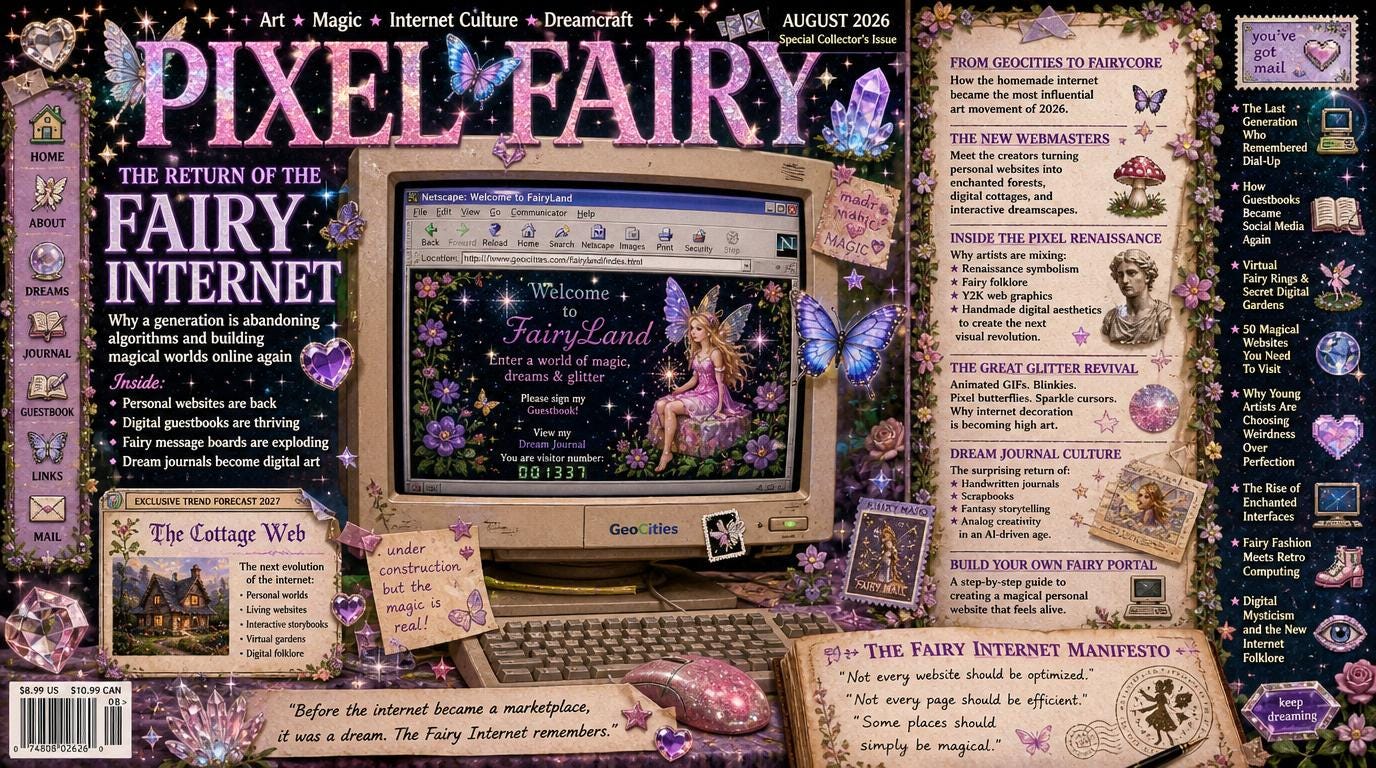
The Pixel Renaissance
Why 2026 Is Abandoning Algorithms and Rebuilding the Fairy Internet
There was a time when the internet felt like entering a forest.
Every click was a winding path. Every website was built by hand. Every page felt like discovering a hidden cottage tucked between digital trees.
Then came platforms.
Templates replaced imagination. Profiles replaced worlds. Algorithms replaced wandering. For twenty years the internet became increasingly optimized, simplified, and automated. Every corner polished. Every profile standardized. Every feed predicted.
The internet became efficient.
And somewhere along the way, it stopped feeling magical.
Now a strange thing is happening.
People are choosing imperfection again. Animated GIFs. Personal pages. Digital diaries. Handmade graphics. Message boards. Glitter cursors. Strange, wonderful websites.
They aren’t searching for the past.
They’re searching for enchantment.
Welcome to the Pixel Renaissance.
The Second Renaissance
The first Renaissance asked: What does it mean to be human?
The second asks: What does it mean to be human online?
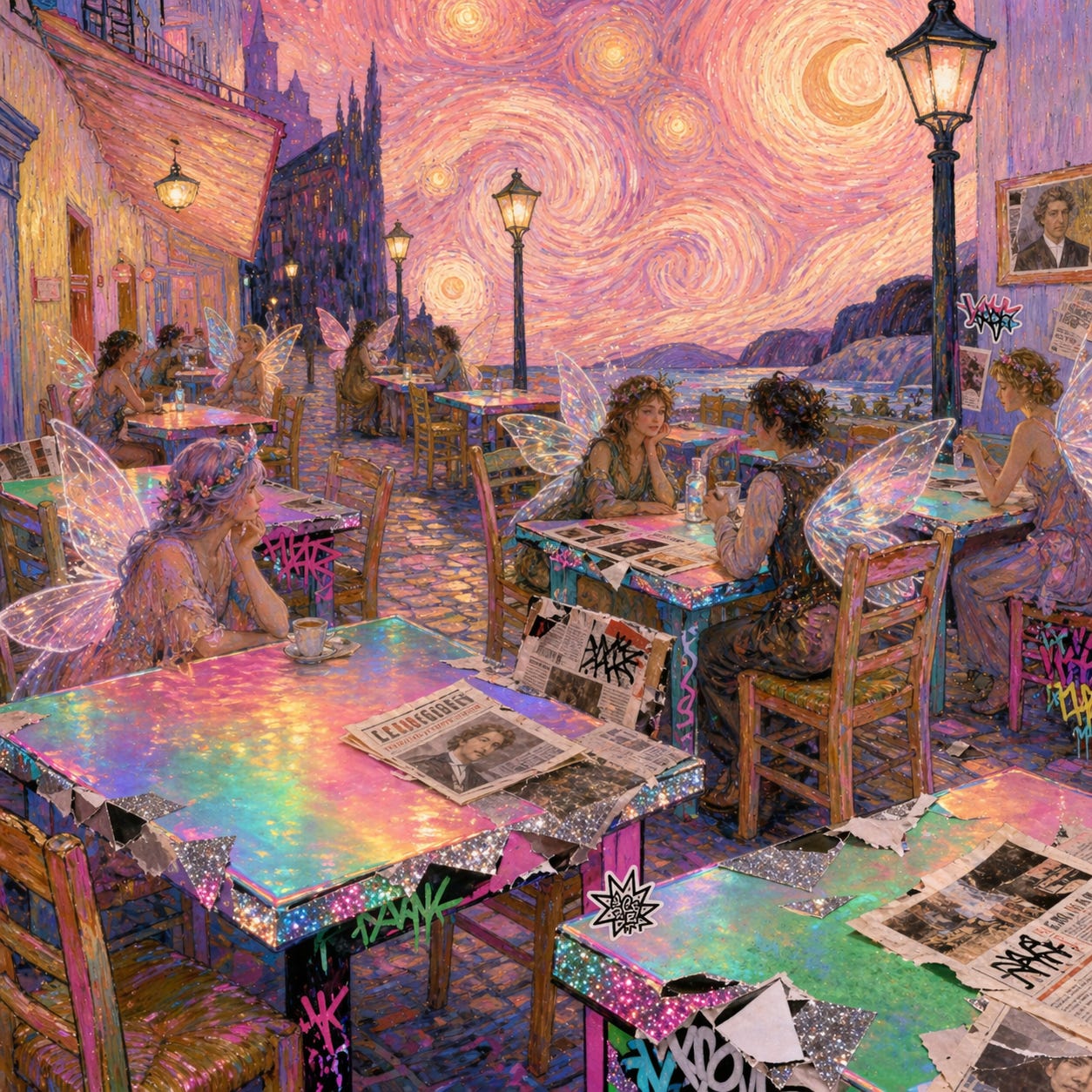
The artists of Florence painted cathedrals. The artists of 2026 build digital worlds. Both movements are driven by the same forces — curiosity, experimentation, and a refusal to accept existing systems.
The Pixel Renaissance is not a website. It is not an app. It is a philosophy, and at its core lies a simple belief:
The internet should feel alive.
The movement emerged from artists, writers, dreamers, and independent creators frustrated with social platforms that transformed creativity into content. Instead of optimizing for engagement, they optimize for wonder.
A Pixel Renaissance website might contain animated butterflies, handwritten journals, secret pages, interactive forests, hidden music, personal mythology, and fairy folklore. There is no pressure to go viral. The goal is simply to create a place worth visiting.
Like a garden. Like a storybook. Like a dream.
From GeoCities to Fairycore
The original GeoCities webmasters of the late 1990s unintentionally invented a new form of folk art.
They weren’t trained designers. They were enthusiasts. They decorated their websites the same way someone decorates a bedroom — and the result was deeply personal.
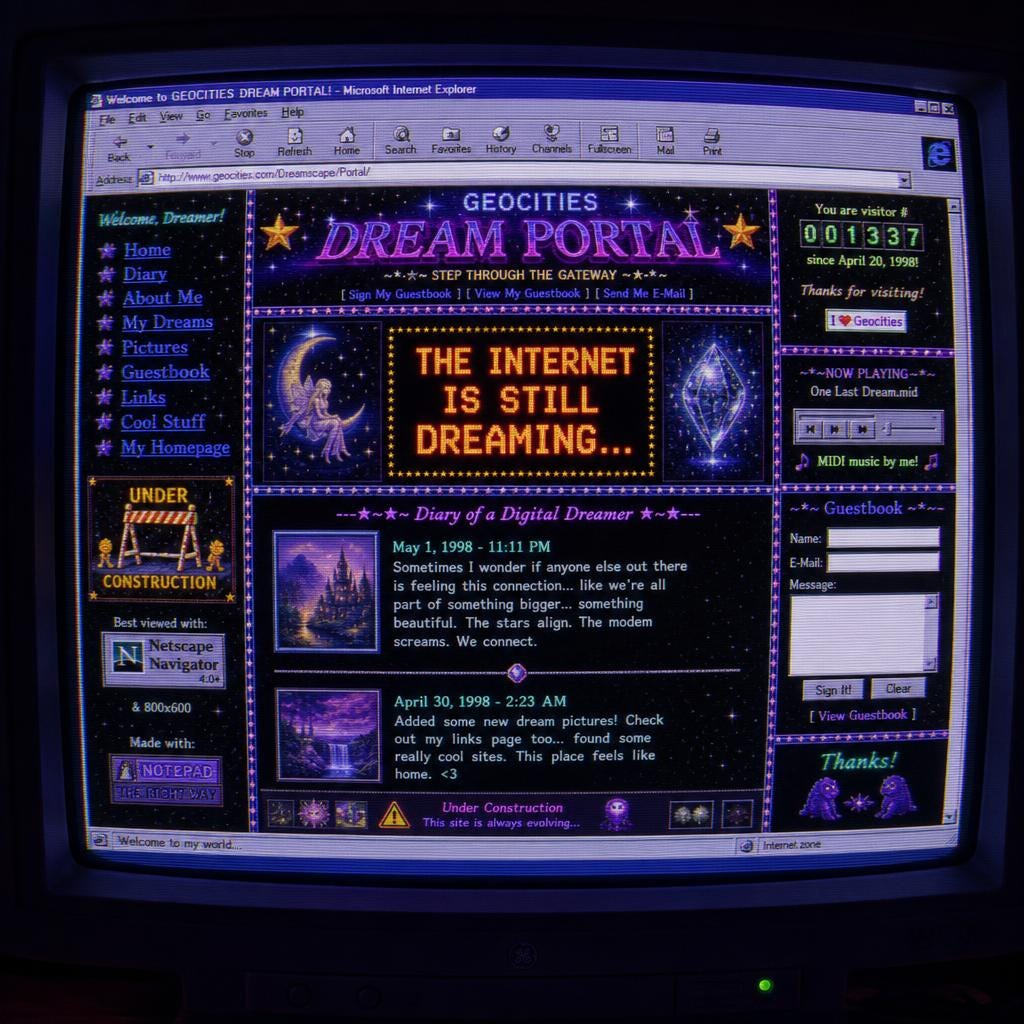
Today’s creators are reviving that philosophy and expanding it. Flowers replace minimalist interfaces. Handwritten fonts replace sterile typography. Pages become experiences rather than products. The websites of 2026 feel like alternate dimensions: part digital architecture, part dream diary, part interactive fairy tale, part Renaissance fresco.
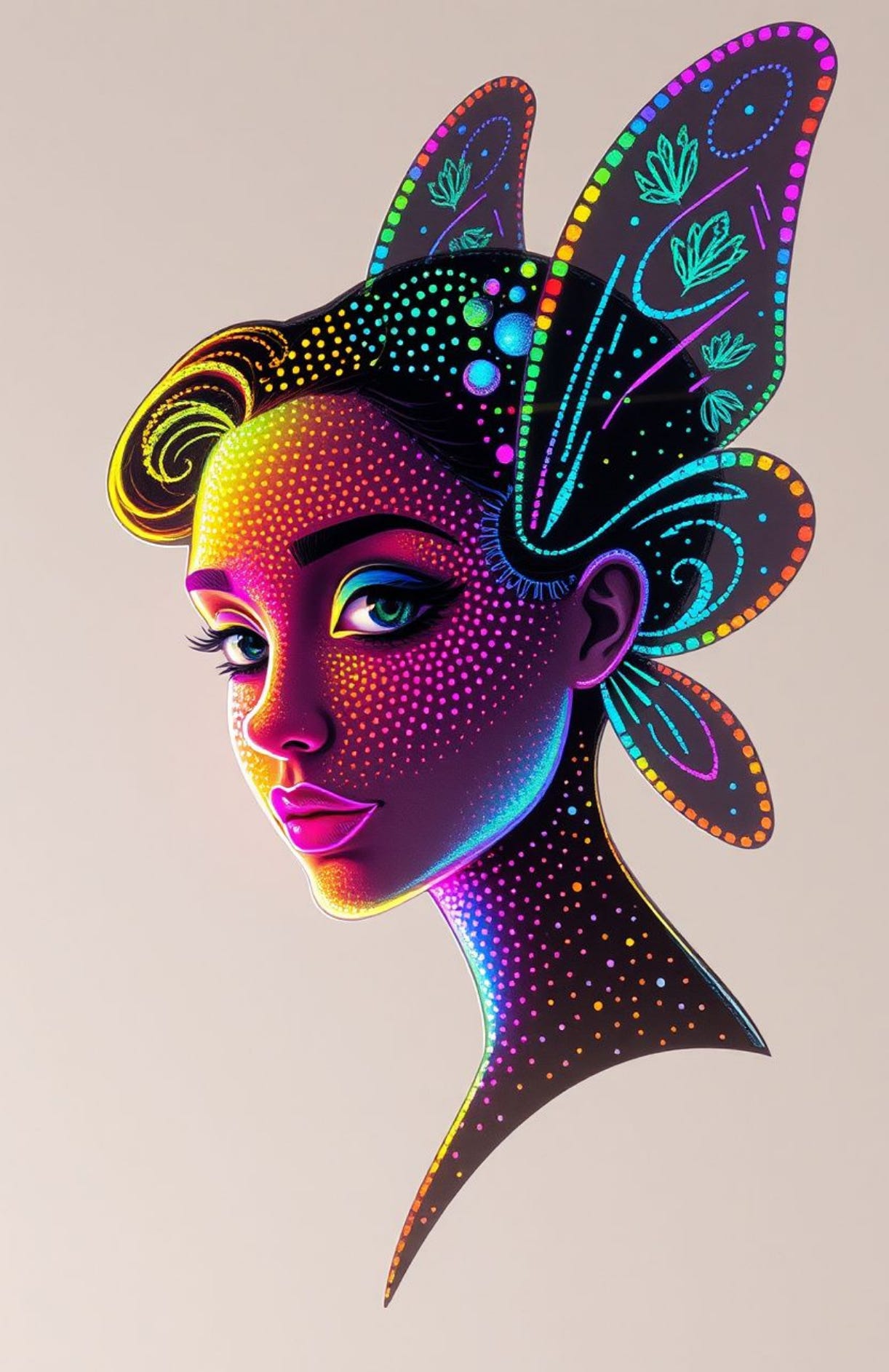
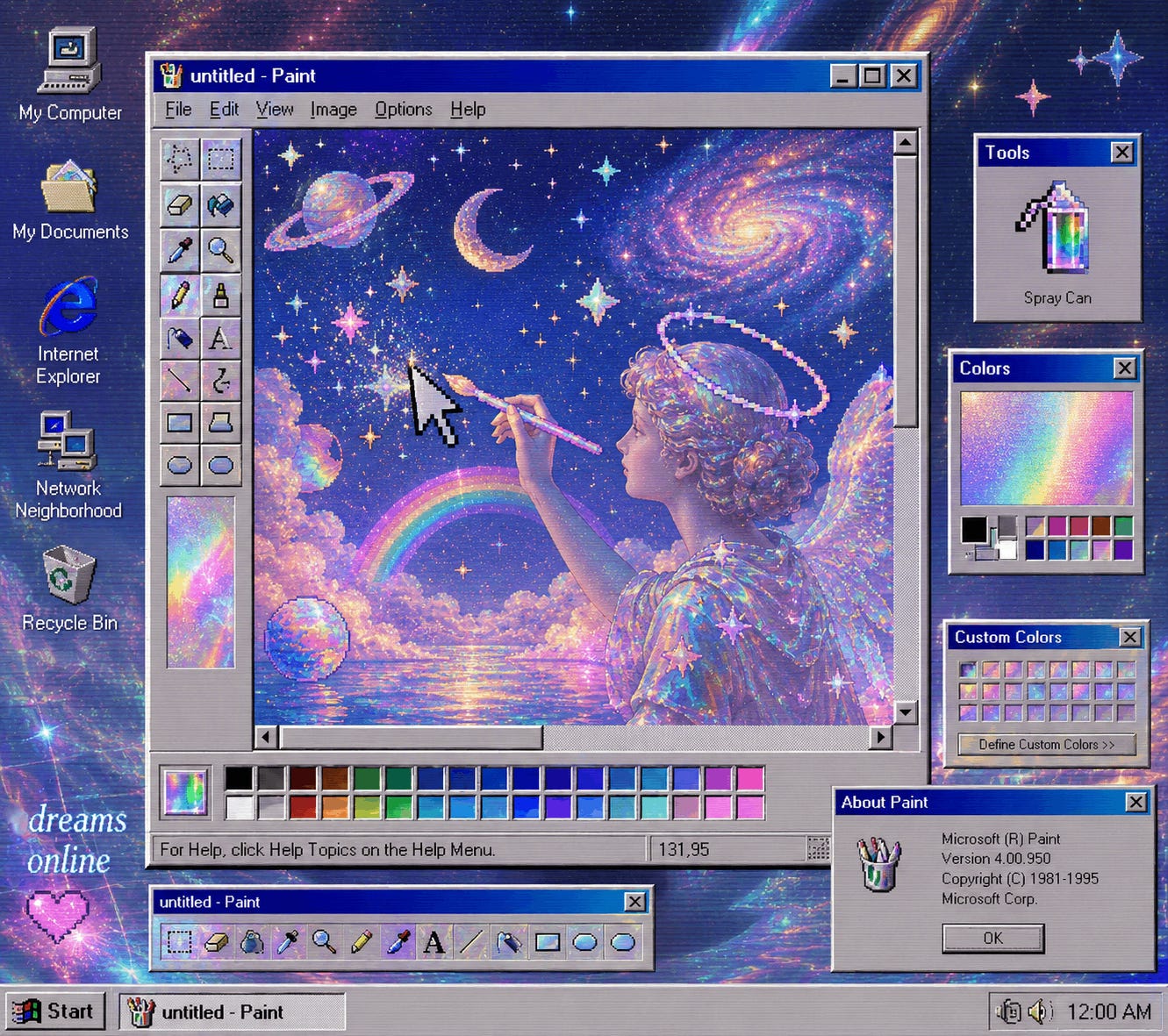
The visual language of the movement mixes eras freely — holographic gradients, pixel stickers, neon typography, Renaissance angels, browser windows, glitter effects, chrome textures, ancient symbols.
The aesthetic isn’t nostalgic.
It’s archaeological.
The Great Glitter Revival
For nearly two decades, internet culture treated decoration as a mistake. Designers were taught: remove everything unnecessary.
The Pixel Renaissance asks a different question:
What if beauty is necessary?
Sparkles. Glitter GIFs. Animated stars. Pixel flowers. Butterflies. Pastel gradients.
These elements communicate emotion. They transform digital spaces into places. A blank room becomes a home when decorated. A website becomes magical when loved.
The return of glitter is not about aesthetics. It is about permission — permission to create beauty without justification.
The New Webmasters
The movement has created a new type of creator.
Not influencers. Worldbuilders.
Their websites contain floating islands, fairy villages, magic libraries, digital gardens, enchanted forests, interactive journals. The personal website has become an art gallery, a journal, a store, a museum, a creative laboratory — all at once.
No algorithms. No feeds. Just worlds.
Many update their sites weekly, adding new discoveries like caretakers tending a living ecosystem. Followers become visitors. Visitors become explorers. The relationship changes completely.
And around these worlds, an older social fabric is regrowing: guestbooks, webrings, message boards, digital zines, virtual art salons. Artists are even building their own patronage networks — modern Medici families assembled one supporter at a time, without a platform in the middle.
Dream Journals Are Back
One object appears repeatedly in this culture: the dream journal.
Creators are combining physical notebooks with digital worlds. A single dream becomes a journal entry, a sketch, a website page, a story, a piece of art.
Many personal sites now function as public dream archives. Visitors browse memories, symbols, sketches, poems, and strange experiences.
The result feels less like social media — and more like visiting someone’s imagination.
Why Weird Is Winning Again
For years, creators felt pressure to look professional.
The Pixel Renaissance rejects perfection.
A crooked drawing. A glittering GIF. A strange poem. An unfinished idea. These imperfections create personality. The movement celebrates human fingerprints, and visitors increasingly seek experiences that feel handmade rather than optimized.
Being strange is no longer embarrassing.
It is aspirational.
What Comes Next: The Cottage Web
Trend researchers believe the next stage of the internet will be smaller, more personal, and more creative.
Instead of giant networks, people will gather in digital neighborhoods. Instead of feeds, they will explore worlds. Instead of followers, they will build communities. Personal worlds. Living websites. Interactive storybooks. Virtual gardens. Digital folklore.
The Pixel Renaissance may be the first glimpse of this future — a future where websites are not products.
They are places.
The Pixel Renaissance Declaration
We believe wonder is a technology.
We believe websites should have souls.
We reject sterile perfection.
We choose curiosity over optimization.
We build cathedrals from pixels.
We create websites like painters create murals.
We welcome glitter, dreams, journals, stories, and mystery.
We remember that before the internet became a marketplace, it was magic.
Before every website became a destination, it was a doorway — a doorway into another person’s world.
Somewhere beyond the algorithms, beyond the feeds, beyond the endless scrolling, a glowing CRT monitor still waits. A butterfly lands on the screen. A guestbook sits open. A path of flowers leads into the unknown.
And a small message appears:
Welcome, traveler. Magick is only a click away. ✨🦋💾🌸
The Renaissance painted humanity into the future.
The Pixel Renaissance codes it there.


Fascinating!